Acid Reflux & Heartburn (GORD) Treatment Perth | Acupuncture & Chinese Medicine
Acid reflux and GERD (gastro-oesophageal reflux disease) are among the most common reasons Australians reach for medication on a daily basis. The burning sensation rising from the stomach, the sour taste in the mouth, the tight chest after eating — these symptoms are genuinely uncomfortable and, when chronic, can damage the oesophagus over time. At Nature’s Chinese Medicine & Acupuncture Clinic in Belmont, Perth, Dr. Yang (Traditional Chinese Medicine) uses classical Chinese medicine to address why your digestive system keeps generating excess acid and why the valve between your stomach and oesophagus is not functioning properly — not just suppress the acid temporarily.
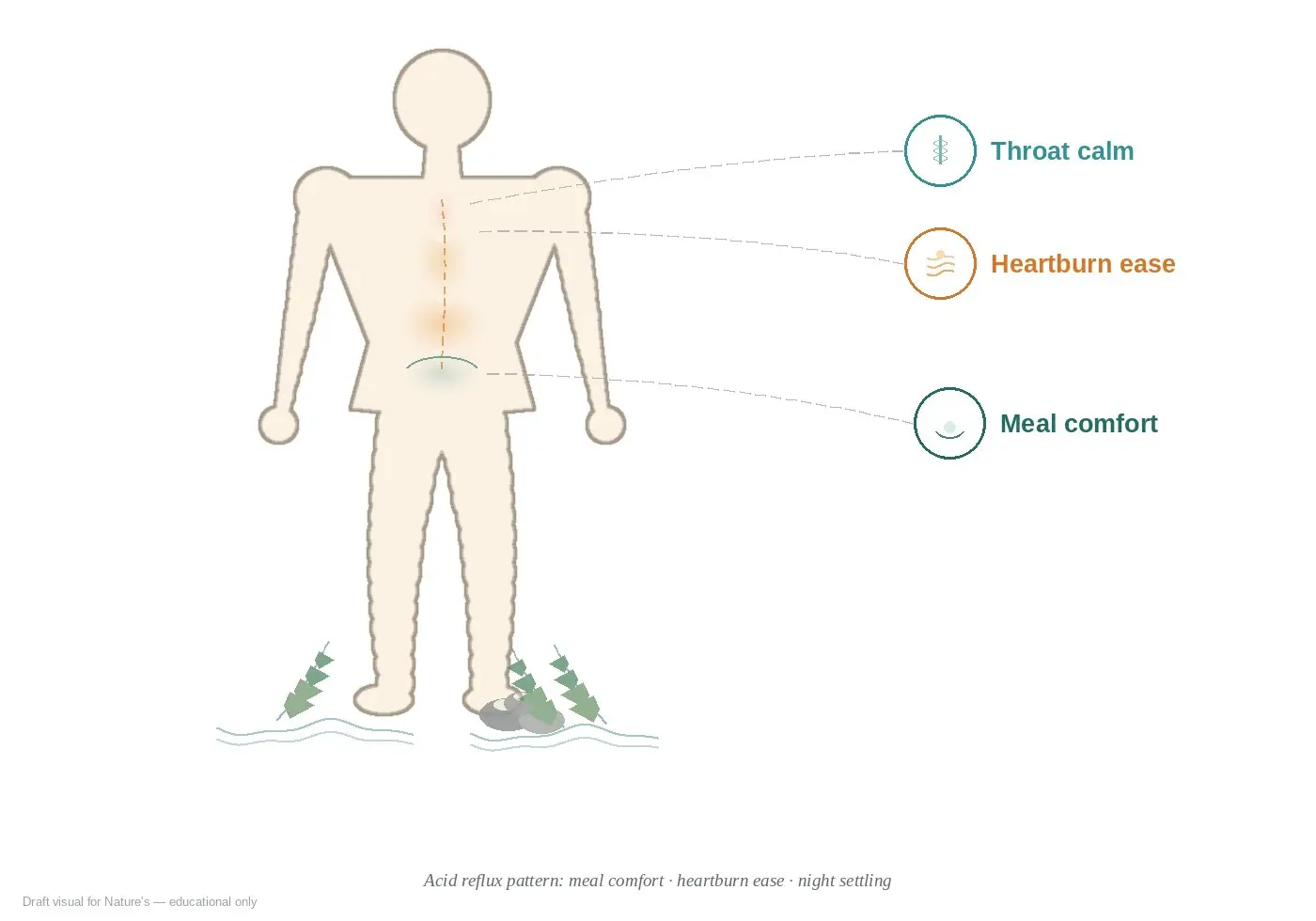
Do These Symptoms Sound Familiar?
- ✅ Burning sensation in the chest (heartburn) — especially after meals or when lying down
- ✅ Sour or bitter taste in the mouth, particularly in the morning
- ✅ A feeling of food coming back up into the throat
- ✅ Difficulty swallowing or a sensation of something stuck in the throat
- ✅ Chronic dry cough or throat clearing that worsens at night
- ✅ Bloating and excessive burping after meals
- ✅ Nausea — particularly in the morning or after fatty or rich foods
- ✅ Chest tightness or pressure after eating
- ✅ Worse symptoms when bending forward, lying flat, or eating late at night
- ✅ Symptoms that worsen significantly with stress, anxiety, or emotional upset
Why Acid Reflux Keeps Returning — The Root Cause That Antacids Cannot Reach
Antacids and proton pump inhibitors (PPIs) reduce the amount of acid in the stomach. For acute episodes, this provides welcome relief. But they do not explain why the stomach is generating excess acid in the first place, or why the valve between the stomach and oesophagus (the lower oesophageal sphincter) is repeatedly failing to close properly. When reflux keeps returning the moment medication is reduced or stopped, the message is clear: the medication is managing the symptom, not addressing the cause. Classical Chinese medicine looks at reflux as a problem of digestive movement — specifically, that the normal downward movement of the stomach has been reversed, causing stomach contents to rise. The reasons for this reversal fall into several distinct patterns: excess heat in the digestive system, stress-driven disruption of gut movement, a weakened digestive system that cannot process food efficiently, or a combination of these. Identifying the specific pattern is the first step to lasting resolution.
Digestive Heat Pattern
Acupuncture to restore downward digestive movement and clear heat + cooling Chinese herbal medicine to resolve the heat driving the reflux
Stress-Driven Reflux Pattern
Acupuncture to restore normal gut-nervous system coordination and reduce the stress response that is disrupting digestive movement + Chinese herbal medicine to resolve the stress-digestive disruption cycle
Digestive Weakness Pattern
Acupuncture to stimulate digestive function and improve gastric emptying + warming Chinese herbal medicine to rebuild the digestive system’s processing capacity
Phlegm & Fluid Accumulation Pattern
Acupuncture to restore fluid metabolism and normal digestive descent + Chinese herbal medicine to resolve the fluid accumulation and clear the sensation of obstruction in the throat
PPI Dependence — Why It Is Difficult to Stop Antacids and What Chinese Medicine Offers
Many patients find that when they try to reduce their PPI medication, reflux returns severely — sometimes worse than before starting medication. This is a known phenomenon called rebound acid hypersecretion. Classical Chinese medicine treats the underlying pattern — the actual reason the stomach is misbehaving — which is why patients who complete a course of Chinese medicine treatment are often able to gradually reduce their PPI use under their doctor’s guidance without experiencing severe rebound reflux. This should always be done in consultation with the prescribing doctor.
Your Treatment Timeline
- • Acupuncture weekly to reduce reflux frequency and severity
- • Comprehensive assessment to identify your reflux pattern
- • Chinese herbal formula commenced — specific to your pattern
- • Dietary and lifestyle guidance matched to your pattern
- • Reflux frequency and severity reducing significantly
- • Bloating and nausea improving
- • Throat symptoms easing
- • Formula adjusted as the acute pattern clears
- • Addressing the constitutional reason reflux keeps occurring
- • Reducing PPI dependence (in consultation with your doctor)
- • Improving overall digestive health and resilience
- • Long-term dietary and lifestyle plan for preventing recurrence
Dr Yang (Chinese Medicine) is an AHPRA-registered acupuncturist and herbalist. All treatments at Nature’s Chinese Medicine & Acupuncture Clinic (Belmont, Perth) are HICAPS-claimable with eligible health funds. Initial consultations include a comprehensive whole-body assessment before any treatment is recommended.
Supporting Research
Evidence on acupuncture for acid reflux and GORD is mixed but often encouraging in everyday care. Trials may report better symptom scores or reflux measures than sham or usual care in the short term; overall certainty of evidence is frequently limited and study methods differ. This page does not quote single percentage improvements from individual papers.
Chinese herbal medicine is sometimes studied for reflux-related discomfort alongside acid-suppression therapy. Formulas and study quality vary; we do not claim proven superiority over PPI therapy alone, and we do not name individual herbs here. Medication changes stay with your prescribing doctor.
What we take into clinic: acupuncture and pattern-based care may support meal comfort and night reflux for some people — always alongside GP care, and seek urgent review for progressive swallowing difficulty, unexplained weight loss, or black stools. Individual results vary.
Educational only. Not a claim of cure or a guarantee of reflux control.
Helpful Habits
- ✅ Eat smaller, more frequent meals — large meals increase stomach pressure and worsen reflux
- ✅ Finish eating at least 2–3 hours before lying down — lying flat with food in the stomach causes it to rise
- ✅ Raise the head of your bed by 10–15cm if you experience significant night symptoms — gravity helps keep stomach contents down
- ✅ Take your herbal formula as directed — it works between sessions to regulate digestive movement
- ✅ Tell Dr. Yang if your symptoms change character or if you have difficulty swallowing that is worsening
Avoid These
- ❌ Avoid lying down immediately after meals — this is one of the most common reflux triggers
- ❌ Do not eat large meals late at night — the stomach empties more slowly in the evening
- ❌ Avoid reducing PPI medication without first consulting your prescribing doctor — rebound reflux can be severe if done abruptly
- ❌ Avoid trigger foods during the treatment phase — spicy, fried, fatty foods, coffee, alcohol, and citrus are the most common offenders
- ❌ Do not sleep without a pillow if you experience night symptoms — flat sleeping significantly worsens reflux at night
Frequently Asked Questions
Can acupuncture work alongside my PPI medication?
Yes — many patients continue their medication during the treatment course. The goal of acupuncture and herbal medicine is to address the underlying reason the reflux is occurring so that, over time, the need for medication reduces. This reduction should always be gradual and in consultation with your prescribing doctor. Acupuncture does not interfere with PPI medication.
Why does my reflux flare badly with stress?
The nervous system directly controls the tone of the lower oesophageal sphincter — the valve that prevents stomach contents from rising. Under stress, the nervous system disrupts this coordination, reducing sphincter tone and triggering reflux. This is why reflux commonly worsens before important events, during overwork, or with anxiety. Acupuncture addresses the nervous system component of reflux directly — which is why patients with stress-related reflux often see rapid improvement.
I’ve had reflux for years and tried everything — can Chinese medicine really help?
Chronic reflux that has not responded to standard management is one of the most common presentations at the clinic. The reason chronic reflux often continues despite medication is that medication suppresses the acid but does not address the underlying reason the stomach is not moving correctly. Chinese medicine addresses digestive movement, gut-nervous system coordination, heat and inflammation, and constitutional digestive strength — aspects that medication alone does not cover.
Is there a link between reflux and what I eat?
Yes, but dietary triggers are individual. Common triggers include fatty and fried foods, spicy food, coffee, alcohol, chocolate, citrus, and tomato. However, the pattern matters: a heat-pattern patient is most triggered by spicy and fried food; a stress-pattern patient may find coffee and alcohol worsen their stress response more than the food directly; a digestive weakness patient is most affected by cold food, raw food, and irregular eating. Dr. Yang (Traditional Chinese Medicine) will give you dietary guidance matched to your specific pattern rather than a generic avoid-list.
How many sessions does reflux typically need?
Mild to moderate reflux that is primarily stress-related or dietary often improves substantially within 6–10 sessions. Chronic GERD with long-standing oesophageal involvement or PPI dependence typically requires 12–20 sessions, with treatment continuing until the underlying pattern has been resolved and medication can be safely reduced with medical guidance.
Can Chinese medicine help the feeling of something stuck in my throat?
Yes — this sensation, known medically as globus, is very common in reflux patients and often persists even when acid is controlled. In classical Chinese medicine, this sensation arises from fluid accumulation impeding normal movement through the oesophageal region. Specific herbal formulas are closely matched to this presentation — often resolving the globus sensation within 4–8 weeks.
Serving Perth & Geraldton — A Multi-Generational Practice
Nature’s Chinese Medicine & Acupuncture Clinic carries a lineage of classical Chinese medicine spanning multiple generations. Our Geraldton clinic is led by Dr. Yang Sr. (Traditional Chinese Medicine) — the founding physician with over 40 years of clinical experience, himself born into a family of Chinese medicine physicians whose tradition predates formal university training. Our Belmont (Perth) clinic is led by his son, Dr. Yang, who trained in the same classical tradition and brings a modern, evidence-informed approach. Together, the two Dr. Yangs bring over 60 years of combined clinical experience to patients across Perth and the Mid West of Western Australia.