Cupping therapy has gained significant visibility in recent years — from elite athletes displaying the characteristic circular marks to mainstream clinics offering it as a stand-alone treatment. But many people are uncertain about what cupping actually involves, the difference between dry and wet (bleeding) cupping, and which type is appropriate for them. At Nature’s Chinese Medicine & Acupuncture Clinic in Belmont, we offer both types of cupping as part of a comprehensive treatment plan. This article explains both clearly.
What All Cupping Has in Common
- ✔ Glass, plastic, or silicone cups are applied to the skin
- ✔ Suction is created — either by fire (traditional method) or a hand pump
- ✔ The suction lifts the skin and superficial tissue into the cup
- ✔ This creates a zone of negative pressure — the opposite of massage pressure
- ✔ Blood flow to the area increases dramatically
- ✔ Muscle tension and fascial restriction are released
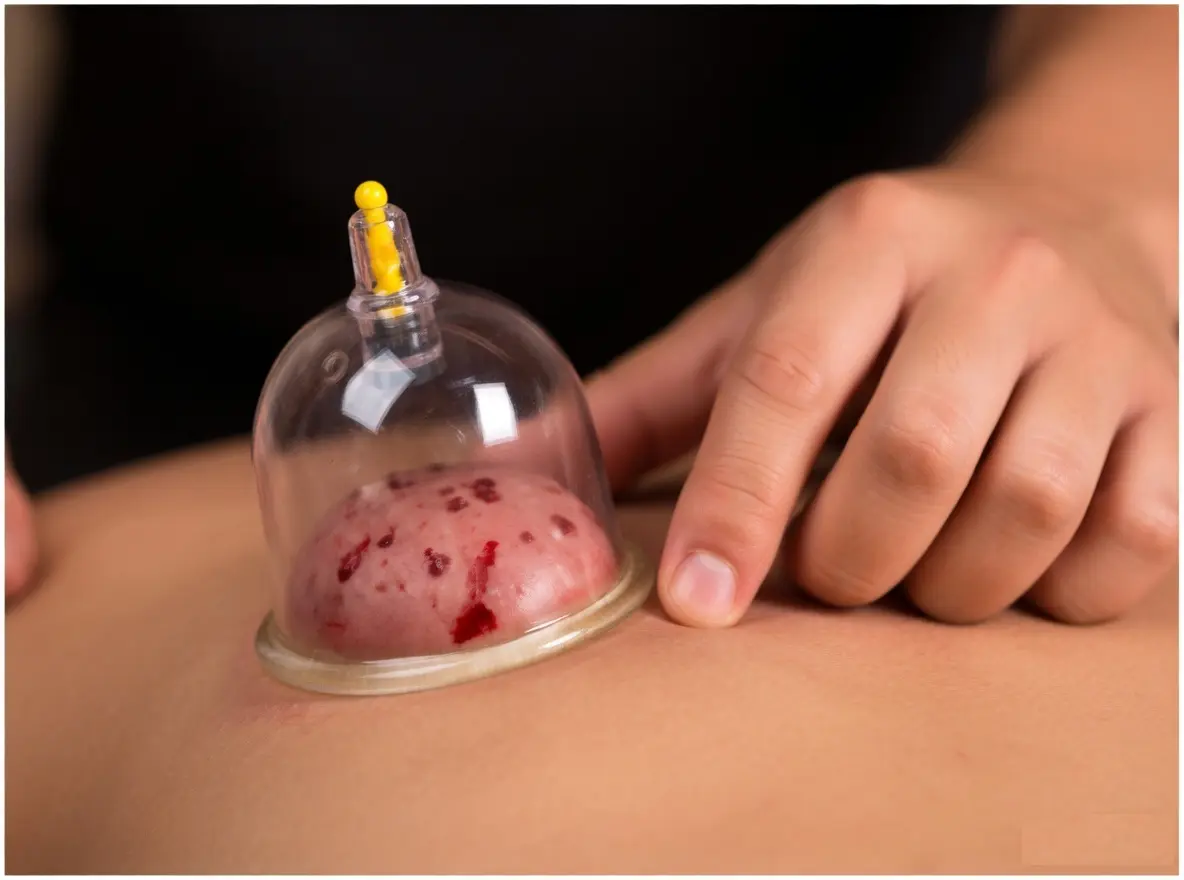
- ✔ The characteristic circular marks are not bruises — they are extravasated blood from dilated capillaries
- ✔ Marks typically fade within 3–7 days
Dry Cupping vs Wet (Bleeding) Cupping
Dry cupping — also called fire cupping or suction cupping — uses suction alone. The cups are placed on intact skin and left stationary for 5–15 minutes, or moved along the skin with oil (sliding cupping). No skin is broken. The suction draws blood and lymphatic fluid to the surface, improving local circulation and releasing muscular and fascial tension. This is the type of cupping most commonly used in Chinese medicine clinics and by physiotherapists and osteopaths. Wet cupping — known in Arabic medicine as Hijama and in Chinese medicine as Ci Luo Xue — involves making small, superficial skin incisions with a sterile lancet before applying the cup. A small amount of blood is drawn out through the incisions. The theory is that this removes stagnant blood, toxins, and inflammatory mediators from the local tissue. Wet cupping is a more specialised procedure with specific indications — it is not appropriate for everyone and is not offered at every session.
Key Takeaway: Both forms of cupping are safe when performed by trained practitioners. We use dry cupping as a standard addition to most acupuncture treatments for musculoskeletal conditions. Wet cupping is offered for specific clinical indications after assessment — not as a default or ‘trendy’ add-on.
What to Expect from Cupping Treatment
- • Suction cups applied to back, shoulders, or affected area
- • Sensation is pressure or warmth — not pain
- • 5–15 minutes of cup retention; or sliding cupping with oil
- • Round marks visible on the skin — colour indicates stagnation level
- • Area may feel warm and tingly
- • Profound muscle relaxation common — similar to deep tissue massage
- • Marks fade progressively over 3–7 days
- • Muscle pain often significantly reduced
- • Marks are darker when more stagnation is present — they lighten with regular cupping
Our practitioners at Nature’s Chinese Medicine & Acupuncture Clinic in Belmont are registered with AHPRA. Most private health funds cover acupuncture — check your HICAPS extras cover.
What Does the Research Show?
Cochrane Database Review, 2012
Cupping significantly reduced pain intensity compared to waiting list and thermal controls — evidence rated moderate quality
Evidence-Based Complementary Medicine, 2018
Cupping significantly reduced pain and improved function in chronic low back pain — effects comparable to other active therapies
Journal of Alternative Medicine, 2016
Wet cupping significantly reduced systolic and diastolic blood pressure compared to controls in hypertensive patients
Pain Medicine, 2019
Cupping — particularly wet cupping — significantly reduced post-herpetic neuralgia pain compared to drug treatment alone
Practical Tips
What Helps
- ✅ Stay hydrated before and after cupping — it helps the lymphatic clearance process
- ✅ Tell your practitioner about any blood thinning medications or clotting disorders
- ✅ Accept that the marks are temporary and not harmful — they fade completely within a week
- ✅ Let your practitioner know if the suction feels too strong — the pressure can always be adjusted
- ✅ Consider cupping as a complement to acupuncture rather than a replacement
What to Avoid
- ❌ Don’t have cupping over inflamed, sunburned, broken, or very sensitive skin
- ❌ Avoid intense exercise or hot showers for 4–6 hours after cupping — the skin is temporarily more sensitive
- ❌ Don’t cover the marks with tight clothing immediately after treatment
- ❌ Avoid cupping over varicose veins, bony prominences, or the face
- ❌ Don’t seek wet cupping from untrained practitioners — it requires specific training and sterile technique
Frequently Asked Questions
Does cupping hurt?
No. The sensation is pressure and warmth — comparable to a strong massage, not pain. Most patients find cupping deeply relaxing. The suction can be adjusted to your preference — some people prefer lighter suction, others a stronger grip.
Why are the marks different colours in different people?
The colour of cupping marks reflects the level of stagnation and poor circulation in the area. Dark purple marks indicate significant stagnation — often seen in people with chronic tension or pain. Lighter pink marks indicate better underlying circulation. The marks tend to become lighter with regular cupping as circulation improves.
How often can I have cupping?
Dry cupping can be done as often as weekly, though we recommend waiting until the previous marks have faded before re-cupping the same area. Wet cupping is typically performed once every 4 weeks maximum.
Can cupping be done on the front of the body?
Yes. While the back is the most common area, cupping can be done on the chest, abdomen, and limbs for specific indications. Respiratory conditions, digestive problems, and some musculoskeletal conditions may benefit from cupping on the front of the body.
Is wet cupping (Hijama) appropriate for everyone?
No. Wet cupping is contraindicated for people on blood thinners (e.g. warfarin, aspirin), those with haemophilia or clotting disorders, during pregnancy, and in certain health conditions. Your practitioner will assess suitability before recommending it.
Will my insurance cover cupping?
Cupping performed as part of an acupuncture treatment is typically covered under the acupuncture component of your health insurance extras. Standalone cupping may or may not be covered depending on your fund. Check with your insurer directly.
Available at both our Belmont (Perth) & Geraldton clinics — led by Dr. Yang and Dr. Yang Sr., a father-and-son team whose family lineage in classical Chinese medicine spans multiple generations.